Can we meet you?
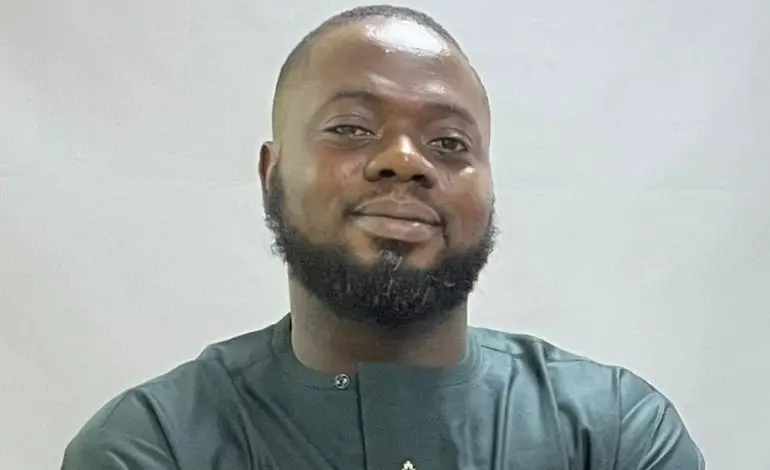
I’m Damola Olatunji—an actor, film producer, and director with over 20 years in the Nigerian film industry. I’ve been privileged to direct more than 30 films, produce many others, and work with some of the most talented individuals in Nollywood. Beyond the camera, I currently serve as the Director of Research and Documentation for TAMPAN and previously chaired the TAMPAN Guild of Directors.
At the moment, I’m on a study break focused on personal research and development because I strongly believe in continuous growth. Filmmaking is my passion, but learning never stops.
As a Director, what do you look for in a story?
A good story should stay with you long after the credits roll. So for me as a director,
firstly I look out for authenticity. I love stories that speak to our experience—stories that
make someone say “I know this life.” Beyond that, I look for emotional truth. Does the
story have something genuine to say about human nature? Can it make people laugh,
cry, or think differently? I’m also drawn to narratives that challenge our society
constructively while entertaining us.
How do you approach pacing and rhythm in a film?
I think of pacing like music—you need moments that build tension, moments of release,
quiet pauses, and crescendos. Our audiences are sophisticated; they can tell when a
film drags or rushes. I pay close attention during editing, watching scenes repeatedly to
feel where the energy rises and falls. Sometimes a scene needs to breathe; other times
you need to cut quickly to maintain momentum. The story dictates the rhythm, not the
other way around.
Do you give detailed direction or do you allow actors freedom to interpret?
It depends on the actor and the scene. I come into every project with a clear vision, but
I’ve learned that the best performances often emerge when actors bring their own truth
to a role. My approach is collaborative—I share my vision, explain the emotional beats I
need, then give room for interpretation. If an actor finds something I hadn’t considered,
I’m open to exploring it. Directing is not about control; it’s about guiding talented people
toward a shared vision.
Can you share a moment when an actor surprised you and changed a scene?
There was a scene I directed where the script called for controlled anger—measured,
restrained. But the actor chose to play it with quiet devastation instead, almost a
whisper. Initially, I wanted to call “cut” and redirect, but something told me to let it play
out. When we reviewed the footage, that quiet delivery was far more powerful than
anything I had imagined. It became one of the most talked-about moments in the film.
That experience taught me to trust my actors’ instincts.
How would your crew describe you as a director?
I think they would say I’m passionate and demanding, but fair. I expect excellence
because I believe in the work we’re doing, but I also understand that filmmaking is
teamwork. No director succeeds alone. I try to create an environment where everyone
feels valued and heard, from the lead actor to the production assistant. I’m told I bring
energy to set—sometimes too much energy—but that’s because I genuinely love what I
do. Some of them have asked me on several occasions where I got my energy and
strength from while filming because I no dey tire.
What scene was the most difficult to execute and why?
I am more of a detailed technical director with a balanced artistic direction, so for me the
most challenging scenes are often the ones that look simple. I once had to shoot a
confrontation between two characters in a single room with minimal dialogue—just
tension, silence, and facial expressions carrying the weight. No action sequences to
hide behind, no elaborate setups. Everything depended on the performances and
camera work being perfectly synchronised. We shot that scene over six hours, adjusting
lighting, trying different angles, until we captured the emotional intensity the story
required.
How has filmmaking changed since you started?
The technology has transformed everything. When I started, we were dealing with
significant equipment limitations and distribution challenges. Today, digital cameras
have democratised filmmaking, and streaming platforms have opened doors to global
audiences. But the fundamentals remain the same—you still need compelling stories,
talented actors, and a dedicated crew. What excites me most is how Nollywood has
evolved in production quality while maintaining our unique storytelling voice. We’re
competing globally now, and that’s remarkable.
What does success mean to you as a director?
Success is when a film moves people—when someone approaches me years later and
tells me a particular scene changed how they saw their own life. Awards and box office
numbers matter, but they’re not the ultimate measure. Success is also about building
something lasting for our industry, mentoring the next generation of filmmakers, and
telling stories that represent Nigeria with dignity and creativity. If my work contributes to
that legacy, I consider myself successful.
What do you hope the audience takes away from your movies?
I want them to see themselves reflected honestly—their struggles, joys, complexities,
and triumphs. African stories deserve to be told with care and excellence. Beyond
entertainment, I hope my films spark conversations, challenge assumptions, and remind
people of our shared humanity. If someone after seeing a movie feels something
deep—something that gets them thinking about their own relationships or choices—then
the film has done its job. That connection between storyteller and audience is sacred to
me.