Can you tell us a little about yourself and how you began your journey in film?
I began my journey in film driven by a deep passion for storytelling. Over time, I discovered that editing is where a story truly finds its voice. It’s not simply about assembling scenes — it’s about
shaping emotion, rhythm, and meaning.
Through each project, I’ve grown not only as an editor but as a storyteller, learning how to transform raw footage into compelling, cohesive narratives. What once felt like arranging clips has evolved into a craft of sculpting moments — finding the subtle beats, the quiet pauses, and
the powerful transitions that bring a story to life.
My journey continues to be one of curiosity and growth, constantly refining the art of turning fragments into stories that resonate.
When you first reviewed the footage for Ogeere, what stood out to you about the story?
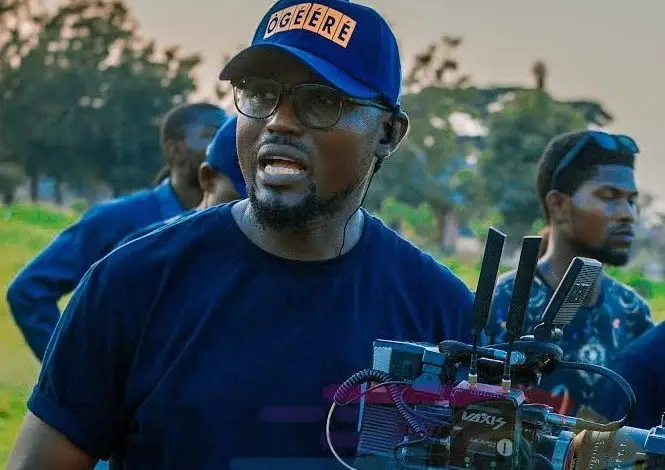
Ogeere is a beautiful story centered on love and betrayal. It’s the kind of narrative that pulls you in — layered with emotion, tension, and depth.
There’s a special feeling that comes with working on a strong production, especially when you’re surrounded by high-end equipment and a passionate team. It brings a different kind of joy and
creative energy to the process.
Set in the 1980s, the film required careful attention to detail, and the production team truly did justice to that era. From the visuals to the atmosphere, everything was crafted to feel authentic
and immersive. I’m incredibly proud and grateful to have been part of this project.
How did you maintain rhythm across both dialogue-heavy and visual driven scenes?
Film editing is not just about cutting from medium to wide shots — it goes far beyond that. It’s about storytelling at its highest level. Your storytelling skill has to be top-notch because editing is where the narrative is truly shaped.
Like they say, “life is what you make of it,” editing is also what you make of it. You can create so much with the footage you’re given. The magic lies in how you interpret it — how you choose moments, build tension, control rhythm, and guide emotion.
As an editor, you have to search for the immersive core of every scene. You must pay attention to every detail — the subtle glance, the silence between words, the pacing of a breath. That’s where the story lives. That’s where the audience connects.
Did you ever withhold visual information to heighten suspense?
Yes — that’s the whole idea. That’s exactly what keeps viewers on their toes.
It’s the intentional cuts. The pauses that linger just long enough. The reaction shot you choose to hold. The silence before the reveal.
Great editing creates anticipation. It builds tension without the audience even realizing why they’re leaning forward. It guides their emotions, controls their breathing, and pulls them deeper into the story.
When editing is done right, viewers aren’t just watching — they’re experiencing. And that
immersive experience is what makes a story unforgettable.
How did the film’s score influence your editing rhythm?
A film’s score can deeply influence the rhythm of the edit. Music isn’t just background — it’s
emotional architecture.
When I’m working on a project, I intentionally sync the pacing of my cuts with the tempo and mood of the score. If the music breathes, the edit breathes. If it builds, the edit builds. The goal is to create harmony between sound and image.
At the same time, I pay close attention to fluidity across scenes. Transitions should feel natural, not forced. Every cut should flow into the next, carrying the audience seamlessly through the
story.
In my experience, a well-crafted score doesn’t just support a film — it elevates it. It strengthens emotion, sharpens tension, and amplifies impact. When sound and picture move as one, the
story becomes unforgettable.
What was the biggest challenge editing Ogeere?
Truthfully, every department delivered exceptional work. From production design to
cinematography, everyone brought their best to the table.
Their dedication and attention to detail made my job much easier as an editor. When each
department executes their vision with excellence, the footage already carries strength and clarity — and that makes shaping the final story a seamless process.
It was truly a collaborative effort, and I’m grateful to have worked alongside such a committed team.
What do you hope audiences experience emotionally because of your editing?
Seriously, as an editor, my ultimate goal is to evoke emotion — to make the audience truly connect with the story. Whether it’s laughter, tears, tension, or quiet reflection, every cut is intentional. Every pause, every transition, every rhythm shift is crafted to guide the viewer’s emotional journey.
I believe editing is not just about structure — it’s about resonance. It’s about creating moments that linger in the heart and mind long after the credits roll.
When viewers leave still thinking about a scene, still feeling something — that’s when I know the story has truly lived.
How did you feel to see your editing work recognised alongside films like Over The Bridge, Breath Of Life, Volume, and Mami Wata at the AMVCA?
Ogeere is not my first nomination at the AMVCA. Back in 2013, during the first edition, I was nominated for Two Brides and a Baby.
Being recognized again is deeply humbling. Seeing your editing work mentioned alongside such respected and established names in the industry reassures you that you’re on the right path.
Moments like this are more than just nominations — they are affirmations. They remind you that the long hours, the attention to detail, and the dedication to storytelling truly matter.
This recognition is a testament to hard work, growth, and passion for the craft. It’s encouraging to see your efforts acknowledged by the industry, and it only fuels the desire to keep pushing boundaries as an editor.
How did your editing work contribute to the pacing and emotional rhythm of the film- aspects you think resonated with AMVCA voters?
I focused on shaping the emotional arc of the film — understanding when to linger, when to cut with urgency, and when to let silence speak for itself. The pacing was carefully structured to support the story’s tension and emotional beats. Every decision was intentional, guided by the rhythm of the narrative and the emotional journey of the characters.
I believe that this attention to rhythm is what truly resonates with viewers — and perhaps with voters as well. When the emotional flow feels authentic and immersive, the story connects on a deeper level.
What impact did the AMVCA nomination have on your career or future opportunities?
The AMVCA nomination is a huge milestone! It has opened doors to new opportunities and
collaborations, giving my work more visibility and raising my profile in the industry.
People are taking notice, and this recognition has already led to exciting new projects and
partnerships. Beyond personal honor, it’s been a catalyst for growth, connection, and creative exploration.